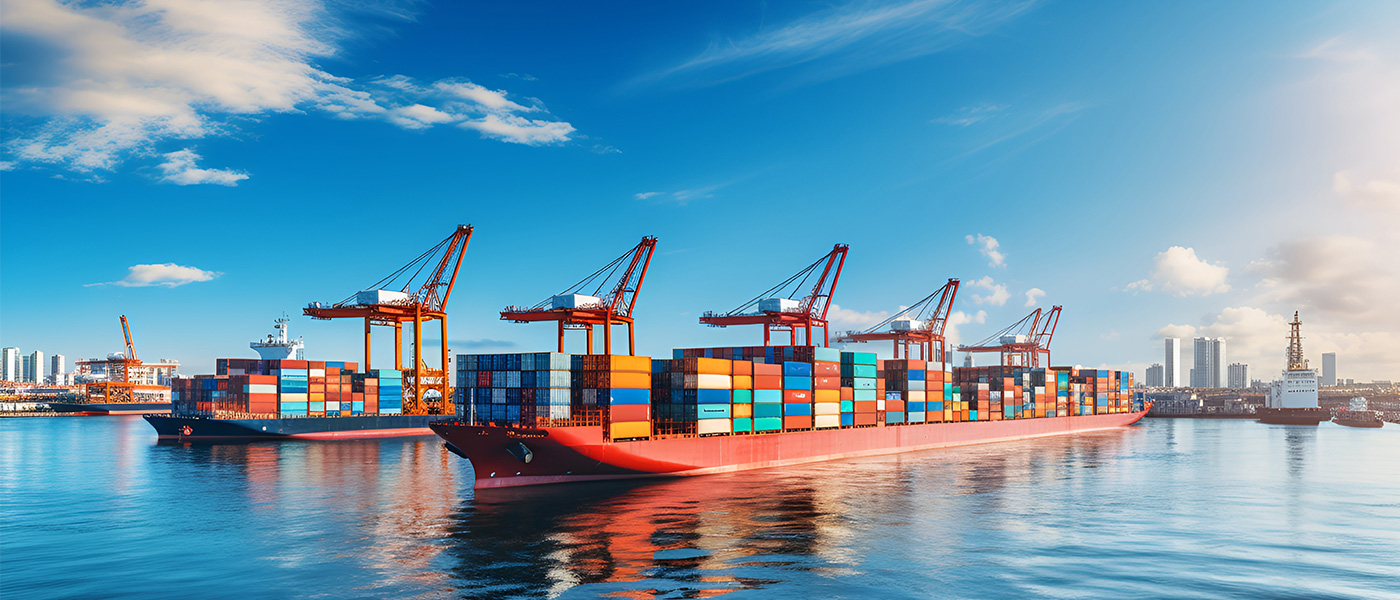
We mainly engage in sea freight export services such as shipping containerized goods, less-than-container load (LCL) goods, and bulk cargo by sea. As a booking agent for multiple shipping lines including COSCO, MAERSK, CHINA SHIPPING, MSC, CMA, HANJIN, OOCL, HYUNDAI, and K-LINE, Shunlei Logistics has a comprehensive service network at home and abroad. We can provide customers with one-stop logistics services covering procurement, booking, customs clearance, customs transfer, warehousing, cargo insurance agency, various certificate application agency, and inspection/quarantine agency.
■ Scope of Sea Freight Export Business
According to customers' entrustment, we handle all businesses related to cargo export before and after shipment, including:
Reviewing various lists and approval documents provided by customers;
Preparing various documents;
Handling booking and customs declaration;
Applying for certificates of origin, insurance policies, and commodity inspection certificates;
Providing container leasing and loading services;
Arranging domestic transportation, cargo delivery to ports, and loading onto ships;
Issuing bills of lading (B/L), settling freight and miscellaneous charges, and express-mailing domestic and foreign documents;
Handling import customs declaration, tax payment, devanning/transshipment, and delivery services overseas;
Undertaking agency services abroad.
■ Operation Process of Sea Freight Export
Order Receiving
After receiving the customer's power of attorney, review the content of the power of attorney and confirm the entrusted matters.
Booking
Prepare the power of attorney to book space with the shipping line and obtain the shipping line's space allocation confirmation.
Container Preparation & Loading
The trucking team obtains the equipment interchange receipt (EIR), picks up containers from the container yard (CY), and delivers them to the customer's factory for loading. Alternatively, the customer directly delivers the goods to the designated container yard or warehouse.
Customs Declaration
Prepare complete customs declaration documents, then initiate export customs declaration. The customs will release the goods after passing the review.
B/L Confirmation
Prepare the bill of lading according to the power of attorney, confirm the content with the customer, and ensure the authenticity and accuracy of the information on the B/L.
Payment Collection
Confirm the fee statement with the customer and collect relevant charges.
B/L Issuance
Issue the bill of lading according to the customer's requirements and mail it to the customer.
Return of Customs Declaration Forms
Return the customs declaration forms to the customer for tax refund and verification within one month after export customs declaration.
B/L Exchange at Destination Port
After the goods arrive at the destination port, the shipping line notifies the consignee to exchange the delivery order (D/O).
Customs Declaration & Cargo Pickup
Prepare complete customs declaration documents, initiate import declaration, and pick up the goods after the customs reviews and releases them.
■ Notes for Sea Freight Export Operation
For the Chinese product name displayed on the customs declaration form, it is necessary to check whether it matches the customs commodity code (HS code) based on the code, and prepare and provide the required customs declaration documents in accordance with the supervision requirements.
All customs declaration documents must ensure consistency of information across all documents.
The customs may inspect the declared goods to confirm whether the actual cargo status is consistent with the information declared on the customs declaration form.
During the peak shipping season, ships are prone to overloading. It is necessary to complete the declaration procedures in advance to prevent the shipping line from dropping the shipment (omitting the cargo from the ship).
When issuing original bills of lading, ensure that each original B/L is affixed with a valid seal.


 Home > Products and Services > International Sea Freight